Showing posts with label meat. Show all posts

Tuesday, June 20, 2023

Fresh meat quality characteristics

Meat is one of the most important foods in the diet of the vast majority of people. Human beings consume protein-rich foods to fulfill their nutritional requirements, mainly of animal origin, such as meat (cattle, sheep, goat, poultry, pig, fish, and seafood/shellfish), milk, and eggs.

Meat supplies easily absorbed iron and assists in the absorption of iron from other foods as well as zinc, and is a concentrated source of high-quality protein and some of the B vitamins and its essential amino acids content usually compensate for deficiencies in diets made up mainly of cereals and other vegetable proteins.

Because fresh meat is animal tissue that is suitable for use as food, the quality characteristics are influenced by various factors such as muscle structure, chemical composition, chemical environment, interaction of chemical constituents, postmortem (p.m.) changes in muscle tissues, stress and pre-slaughter effects, product handling, processing and storage, microbiological numbers and populations, etc.

Meat quality should be defined by most consumer preferences. The most important meat quality attributes include tenderness, taste, juiciness, leanness, nutrient quantities (i.e., calories, vitamins content, fatty acids profile, etc.), safety and convenience. However, there is great variation in the chemical and physical components of beef, which can be attributed to factors such as the breed, sex, and age of the animals, nutrition and anatomical position of the cut.

The consumers decide the quality of fresh meat during purchases by using its color which is an important property to determine the quality of meat. Discolored meat is related to the conversion of oxymyoglobin to metmyoglobin in the chuck and round muscle. Red meats such as beef or lamb are usually bright red in color as an indication of the freshest meat available.

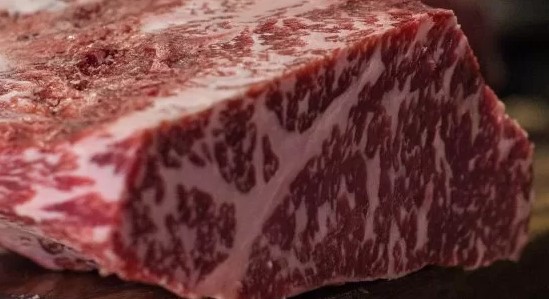
High-quality beef meat has firm, velvety, fine-grained lean, bright red in colour and well-marbled. The fat is smooth, creamy white, and well distributed. In young beef the bones are soft, porous, and red; the less desirable mature beef has hard white bones.

Marbling - interspersed fat – gives a deeper, more delicious taste. . It should feel firm, as cold fat is hard. A fatty coating also contributes to helping the meat retain its juice and taste while cooking.

Consumers want the meat they eat to not only taste better but also be safe, nutritious, and have an extended shelf life.
Fresh meat quality characteristics

Monday, November 21, 2022

Meat marbling

In meat, but specifically in red meat, fat content is an important feature that results in a good eating experience. Marbling is the visible unsaturated (healthy) intramuscular fat that accumulates within the muscle and between the muscle fibre bundles

Marbling, or white flecks of fat within the meat muscle, is often evaluated on the cut surface of the rib-eye or loinieye. The most commonly used method for evaluating marbling is visual comparison with published standards. Marbling affects meat’s juiciness, tenderness, texture, and flavor—attributes that determine “eating experience.”

Marbling that is fine-textured (small flecks) and uniformly distributed is preferred over marbling that appears as large, coarse flecks of intramuscular fat. Certain cuts of beef naturally accumulate more intramuscular fat than others. Some cuts known for their high degree of marbling are ribeye, short rib, strip, and flatiron steaks. Other premium cuts, such as filet, are prized for qualities other than marbling, such as extreme tenderness.

Increasing the protein content of the diet may increase starch digestion and absorption in the intestinal tract. The increasing the protein level in diets of young calves to as high as 16% increases marbling. The combination of higher grain and protein in diets will lead to more marbling.

In the United States, Japan, and Australia, trained human graders visually appraise the amount of white fat flecks in muscle and their spatial distribution to determine the quality of meat.
Meat marbling

Friday, June 18, 2021

Meat tenderness

The most important aspect of meat quality is its eating quality or overall eating satisfaction, being a function of the combined effects of tenderness, juiciness, and flavour. Meat tenderness is the most difficultly predicted trait, but it is very important to meat quality and consumer acceptance. Tenderness is based on ease of chewing that is contributed by many factors. Among them, the fibrous nature of muscle contributes to chewing resistance

The fact that many myofibrils are arranged in register across the muscle fibers leads to more strength for muscle and decreases muscle tenderness.

Variation in beef tenderness may be attributed to breed (genetic status), carcass composition, and environmental factors (chronological age, time on feed, implants and ante-mortem stress). The three factors that determine meat tenderness are background toughness, the toughening phase and the tenderization phase. While the toughening and tenderization phases take place during the post-mortem storage period, background toughness exists at the time of slaughter and does not change during the storage period.

The tenderization process is estimated to begin soon after slaughter (perhaps as soon as 3 h, but it is highly variable among individual carcasses).

Current evidence suggests that proteolysis of key myofibrillar proteins is the cause of meat tenderization. These proteins are involved in:
*Inter-myofibril linkages (e.g., desmin and vinculin),
*Intra-myofibril linkages (e.g., titin, nebulin, and possiblytroponin-T),
*Linking myofibrils to sarcolemma by costameres (e.g. vinculin and dystrophin), and
*The attachment of muscle cells to the basal lamina (e.g. laminin and fibronectin).

The function of these proteins is to maintain the structural integrity of myofibrils.
Meat tenderness

Friday, April 23, 2021

Meat texture

The quality of meat is determined by a number of factors that affect palatability (tenderness, juiciness and flavor). Texture is one of the most important characteristics of meat. It is a feature that can be defined by certain homogeneous properties which are detected by human senses relating to vision, hearing, somesthesis and kinesthesis.

Meat juiciness plays a key role in meat texture, probably contributing to its variability. Juiciness means the amount of juice “liberated” during chewing the meat.

Properties of beef texture include both initial (first bite with incisors) and overall tenderness (after multiple chews) as well as more complex sensory attributes of chewing and mouthfeel with multiple descriptors such as fiber cohesiveness, adhesion, friability, chew count, mealiness, mushiness, softness, amount of residual connective tissue, rubberiness, and hardness.

The tenderness of cooked meat will be largely influenced by connective tissue and myofibrillar components. This is because during heating, a number of chemical changes associated with the muscle fibers and connective tissues occur.

The textural properties of meat are often adapted by food processing, where the aim is often to make the structure of meat, and food in general, more delicate and easier to chew.

The most common method to measure meat texture, the Warner–Bratzler shear force, uses a standardized blade, but has many other unstandardized aspects that limit absolute comparisons of results. Warner-Bratzler Fixtures measure the force required to cut through a piece of meat. The fixture consists of a steel frame supporting a triangular shear blade. This test measures the maximum force as a function of knife movement and the compression to shear (cut off) a sample of meat. The result of this measurement shows the hardness (toughness) of meat.
Meat texture

Thursday, November 26, 2020

Juiciness of meat

According to Food and Agriculture Organization (FAO), juiciness depends on the amount of water retained in a cooked meat product.

Water-holding capacity of fresh meat determines the visual acceptability thus influencing the consumers’ willingness to purchase the product. Meat juiciness is an important contributor to eating quality and also plays a key role in meat texture, probably contributing to its variability.

Juiciness increases flavor, helps soften meat - making it easier to chew, and stimulates saliva production in the mouth. Water retention and lipid content determine juiciness. Marbling and fat around edges helps hold in water.

Meat juiciness is considered to arise from moisture released by meat during chewing, and moisture from saliva, and is influenced not only by meat-related factors, such as fat content, but also by physiological and psychological factors inherent to individual tasters.

The consequence of poor WHC is low cook yields and often “dry (lack of juiciness)” of meat.
Juiciness of meat

Thursday, January 30, 2020

Storage of cured meat

During storage, cure meats deteriorate firstly because of discoloration, secondly because of oxidative rancidity in the fat, and thirdly on account of microbial changes, the latter having become of greater importance since the advent of prepackaged methods of retailing.

The usefulness of antioxidants in cured meats is pronounced in helping retain typical cured meat color during storage.

It was reported that the temperature of cooking influences the rate of color formation, the amount of cure meat pigment formed and its stability during storage. Salted, undried meats, such as corned beef, should be held at 4.4 °C or below at all times after curing since there are some microorganisms that may grow in the salt contents present in such products.


Chopped beef which is dried as well as salted, has a low enough moisture content to prevent the growth of all microorganisms and may be held at room temperature.

The product of cured meat are vacuum packaged or kept under modified atmosphere, so the product container integrity and sealing operations must also be controlled.
Storage of cured meat

The most popular articles

Other posts